

Case Study: Layers of Defense – Against a Possible Accident
Training Delivered By: Yashpal Singh<br>Organized By: DPMC Ankleshwar <br>Audience: EHS Professionals, Process Engineers, Safety Officers<br>Training Type: Conference Training / Lecture
Background
The Disaster Prevention & Management Centre (DPMC), Ankleshwar, organized a large-scale conference and exhibition focused on industrial safety, disaster prevention, and process risk management. The event brought together safety professionals, engineers, and industry experts to discuss best practices and latest developments in process safety and accident prevention.
As part of this initiative, Mr. Yashpal Singh was invited to deliver a specialized training session/lecture on Layers of Defense Against a Possible Accident. This session provided participants with practical insights, methodologies, and real-world examples to strengthen their safety systems.
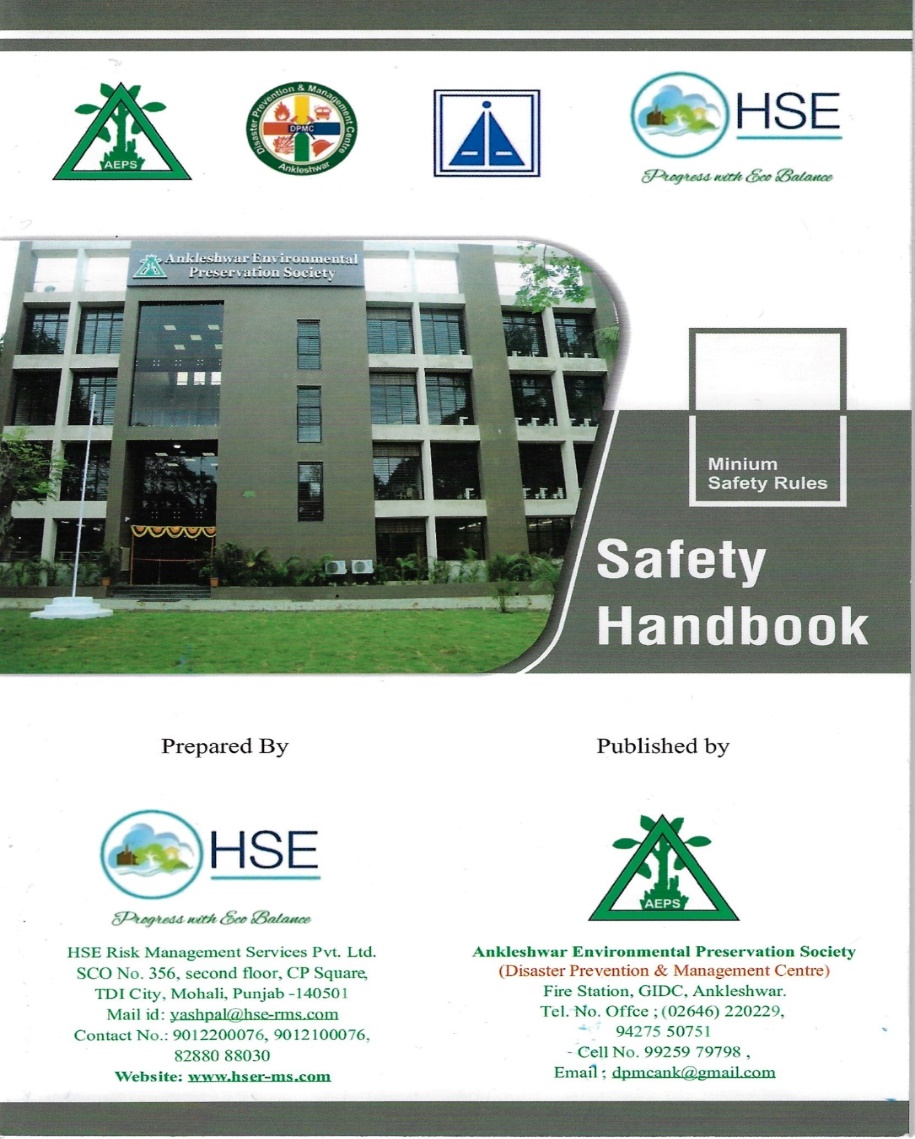
As part of the conference, Ankleshwar Environmental Preservation Society (Disaster Prevention & Management Centre) published the Safety Handbook, prepared by HSE-RMS, which serves as a practical reference for process safety, accident prevention, and multi-layered defense strategies. The handbook covers topics including Layers of Defense, life safety rules, emergency actions, and important process safety information, supporting participants in practical application and regulatory compliance.
Training Objectives
The session aimed to:
- Explain the concept of Layers of Defense and their importance in preventing accidents
- Discuss types of layers and their practical application in industrial settings
- Introduce basic rules for effective implementation
- Provide real-world examples and case studies from the AEPS Safety Handbook
- Enable participants to strengthen accident prevention strategies in their operations
Training Agenda
The training session covered:
- Synonyms – Terminology used in process safety
- Definitions – Core concepts of Layers of Defense
- Reference – Industry standards, regulations, and handbook guidelines
- Layers of Defense – Overview and explanation
- Types of Layers of Defense – Preventive, mitigative, active, and passive
- Explanation – Function and effectiveness of each layer
- Basic Rules of Layers of Defense – Practical guidelines for implementation
The session also highlighted examples from the AEPS Safety Handbook, including:
- Handling flammable and explosive chemicals
- Managing electrical hazards and static charges
- Emergency response procedures and life safety rules
Learning Outcomes
After the training, participants were able to:
- Identify and differentiate various layers of defense
- Apply basic rules to implement effective safeguards
- Understand the interaction of preventive and mitigative measures
- Strengthen accident prevention strategies in their facilities
- Use the Safety Handbook as a practical reference for LOPA, safeguards, and emergency preparedness
Value Delivered
- Enhanced understanding of multi-layered accident prevention
- Stronger and more structured safety systems
- Reduced dependency on single-layer protection measures
- Improved compliance with industry standards and regulations
- Access to a comprehensive Safety Handbook for ongoing reference
Conclusion
The Layers of Defense training delivered by Yashpal Singh at the DPMC Ankleshwar Conference successfully reinforced the importance of multi-layered safety strategies. With insights from the AEPS Safety Handbook, participants were equipped to implement effective layers of protection, enhance process safety, and ensure safer operations in their facilities.